
Science – the 6th Sense of Humanity
Pașoptiștii Secolului XXI – despre diaspora Româno-Americană
– Idei, informații, noutăți despre diaspora Romano-Americana din zona NJ-PA-NY – o deschidere si provocare si spre alte opinii si cugetări ale altor români stabiliți in America – Editorial trimestrial!
Gândind Diferit – Dincolo de Confortul Personal !
– provocările programului de doctorat/master in universitățile americane –
Thinking out of the box – Stepping out of your Personal Comfort Zone
– the challenges of the graduate studies at a USA university –
Ca o prima provocare pentru tinerii români interesați ȋn informații despre programul doctoral din universitățile americane, va fi faptul că vă voi spune totul in limba engleză, cu speranța că veți realiza si înțelege complexitatea și multitudinea de cerințe pentru a deveni “Alumini” unei universități americane via programul doctoral (aici denumit “Graduate Program”), ajungând să fii “încoronat” cu titlu de „Doctor” (e.g.Molecular & Cell Biology Doctorate, U.C. Berkeley, CA-USA)
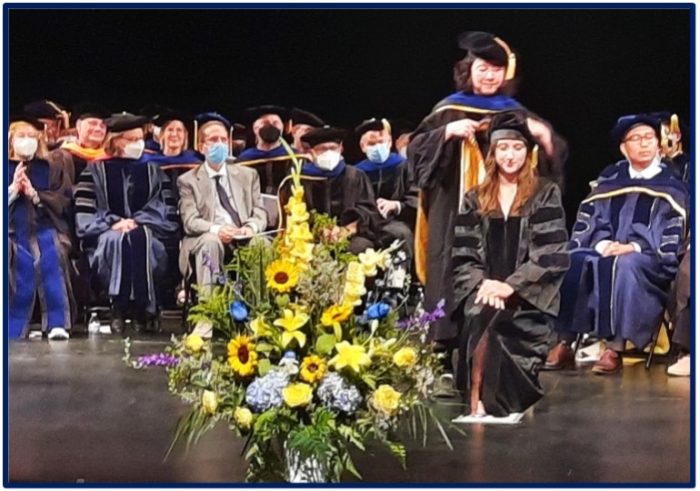
sau cum se zice aici „Doctor in Philosophy” followed by the field of study (e.g. chemistry, engineering, neuroscience, etc.), ce aduce un prestigiu si respect deosebit, însă mai ales și în primul rând, RESPONSABILITATE!
…. si am scris „responsabilitate” cu litere mari, pentru ca odată ajuns acolo, fiecare cuvânt și acțiune a ta este pusă in prisma a ceea ce ai devenit, un lider in știință, un lider in societatea academică, si mai ales un lider in societate ! Şi acum…. …. I switch to English !
For a Romanian who did her/his undergraduate studies in a Romanian university, and wishes or considers to continue her/his education at US university in a Graduate School program, here are some tips, key steps to follow:
I. Identify the universities in the US that meet your expectations –
- Online – visit/explore several university websites (max 5-6 universities)
- Consider open days/virtual or in person visits if possible/can afford
- Contact the universities’ International Centers to provide supporting information specific to the university you are considering
- Get in contact with professors in the department of interest or co-nationals at those departments, and even the Romanian honorary consuls of the state where the university is located (if there is a Romanian consul in that state)
II. Discuss the option of studying abroad with the undergraduate professors/advisors
- Help focusing on a certain subject/with impact in the future (preferable)
- Having previous research activities as undergraduate student helps the application
- Explore specific exchange program between your university and US universities, if one exists – helps with the logistics/paperwork
III. Admission
- Application to be filled + application fee (may be several hundred dollars/no refund)
- Recommendation Letters – super important
- Take the TOEFL and GRE General + Subject (some universities offer subject Qualifying Exams = saves GRE cost/not needed)
IV. How to Finance – living in the USA!
- Teaching Assistant – will teach labs/recitations/help hours
- Research Assistant – funding comes from the advisor’s R&D projects & grants
- Self-support (if one could afford the annual cost/X0,000$/year)
V. The Challenges of the Doctoral Program – 4-6 years
- Finding the right adviser and choosing an interesting research topic
- Putting together a supportive committee based on the subject
- 2+ years of graduate level courses – part of the doctoral program in the US
- Pass the 2nd year oral exam = the formal entry into the PhD program
- Collect 12 points in so-called CUM-EXAMS – big challenge! (not all US PhD programs have this requirement)
- Perform research, write at least one paper(s) and try to publish (HI journal)
- Defend your doctoral degree = graduate!
VI. Continuing R&D activities at other universities/fellowships
- One year extension for continuing training via post-doctoral fellowship, Fulbright Fellowship, others fellowship – work permit possible via training/specialist visa!
- Continue to publish; learn how to write research proposals/grants/patents!
As my goal is to keep things simple, thus I will leave it like this for now in terms of useful information someone interested indeed in pursuing a doctoral degree program in US. Any details will be very specific to a given university, as each school will have a basic set of requirements but could add additional challenges, to make their graduates more competitive on the job market and perform at the highest scientific level (e.g. cumulative exams during the graduate school years, or a foreign language requirement, or a semester at a university abroad).
The graduate program in general is very demanding and requires a lot of dedication, long hours of work, including evenings and weekends, stress, and personal life sacrifices. Not everyone will succeed, but unless you don’t try, you will never know what are your limits.
Thus, this is why I called this small story “Thinking out of the box – Stepping out of your Personal Comfort Zone”. I hope many of your will take the challenge and succeed, but I also hope that who even succeeded, ultimately will decide to return to our home country, Romania, and in this way, to become the new responsible leaders of the country…… and as I called this Social Editorial, you will become “Pașoptiștii Secolului XXI”
Wishing you GOOD LUCK…. and as I’ve always told to my daughter Laura, BE SMART !!!


The Urgency of Climate Action: A Call to Transform Our Future
Mihaela Madaras, PhD
Innovation and Sustainability Leader
mimadaras@earthlink.net
March 28, 2024
This article marks the beginning of a series that aims to shed light on the critical sustainability challenges facing our planet. As a scientist and sustainability expert, I am compelled to bring the issue of climate change to the forefront of public awareness, not with a sense of despair, but with a hopeful and constructive attitude.
The time has come to confront the greatest challenge humanity has ever faced – the looming threat of irreversible climate change. Despite the overwhelming scientific evidence and the dire warnings from experts, our collective response has been woefully inadequate. Year after year, we have set new records for greenhouse gas emissions and fossil fuel extraction, moving further away from the goal of limiting global warming to 1.5 degrees Celsius.
The implications of our current trajectory are staggering. The United Nations estimates that without significant intervention, we are on course to experience global warming of 2.5-2.9°C by the end of this century. Such a scenario would have catastrophic consequences for our planet’s ecosystems, food security, and the very habitability of large swaths of the Earth.
However, this article series is not one of despair. Rather, it is a call to action, a rallying cry for a fundamental transformation in the way we approach the challenge of sustainability. We have the knowledge, the technology, and the collective will to change the course of our future – if only we have the courage to embrace it.
Through this series, I aim to provide a comprehensive and solutions-oriented perspective on the climate crisis. By delving into the root causes, the scientific evidence, and the pathways to a sustainable future, I hope to inspire and empower readers to become active participants in the fight for the preservation of life on our planet, not just for our children and grandchildren, but for generations to come.
The Science of the Greenhouse Gas Effect
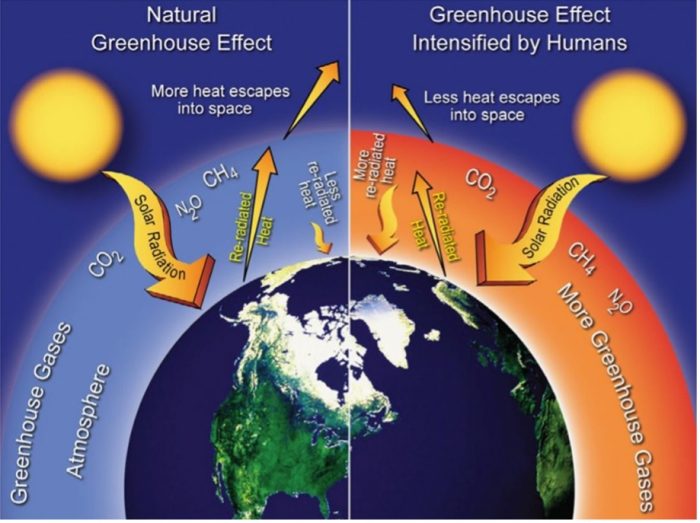
Sunlight, with the natural greenhouse effect process, makes the earth habitable. While around 30 percent of the solar energy—the light and heat from the sun—that reaches our world is reflected back into space, the rest is either absorbed by the atmosphere or the earth’s surface. This process, which is constantly happening around the globe, warms the planet. This heat is then radiated back up in the form of invisible infrared radiation. While some of this infrared light continues on into space, the vast majority gets absorbed by atmospheric gases, known as greenhouse gases, causing further warming.
But higher concentrations of greenhouse gases, and carbon dioxide (CO2) in particular, are causing extra heat to be trapped and average global temperatures to rise. For most of the past 800,000 years—much longer than human civilization has existed—the concentration of CO2 in our atmosphere was roughly between 200 and 280 parts per million. (In other words, there were 200 to 280 molecules of the gases per million molecules of air.) But in the past century, that concentration has jumped. In 2013, driven up largely by the burning of fossil fuels and deforestation, CO2 in the earth’s atmosphere surpassed 400 parts per million—a concentration not seen on the planet for millions of years. As of 2023, it has reached more than 420 parts per million, which is 50 percent higher than preindustrial levels.
Implications of Current Emission Trajectories
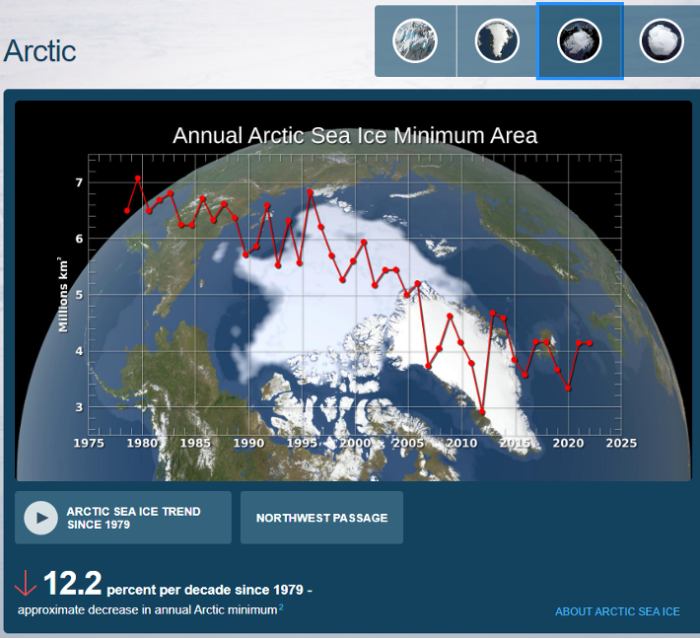
To contextualize the impact of rising global temperatures, projections indicate that without significant intervention, we are on track to exceed the 1.5-degree Celsius threshold by 2030. The United Nations warns that under existing climate policies, global warming could reach 2.5-2.9°C by the end of this century, with dire consequences for ecosystems and human populations worldwide. We are already seeing the effects of the rising temperatures in the melting of the ice in glaciers and arctic sea ice at a 12.2% per decade since 1979.
https://www.climate.gov/news-features/understanding-climate/climate-change-global-temperature
Effects of 2 Degrees Celsius Warming
A temperature increase of 2 degrees Celsius would result in profound changes, including a substantial portion of the global population facing severe heatwaves regularly, sea level rise affecting hundreds of millions, heightened wildfire risks, agricultural disruptions leading to food insecurity for millions, habitat loss for numerous species, and a catastrophic decline in coral reefs.
Escalation to 3 Degrees Celsius
Should temperatures rise by 3 degrees Celsius, the outlook becomes even more alarming. This scenario forecasts widespread exposure to life-threatening heat and humidity, a significant surge in wildfires across Mediterranean regions, prolonged droughts, mass extinctions of Earth’s species, and a cascade of ecological disruptions that defy easy quantification.
Pathways to a Sustainable Future
Amidst these sobering projections lies a glimmer of hope – the vast majority of these catastrophic outcomes are preventable. However, achieving this requires a paradigm shift in our approach to climate action. Incremental changes are no longer sufficient; we must embrace systemic transformations that challenge the status quo.
Rethinking Economic Systems – It is imperative to redefine success beyond mere financial gains and prioritize sustainability over short-term profits.
Global Responsibility and Collaboration – Addressing climate change necessitates collective action on a global scale.
Empowering Collective Action – By fostering a sense of shared responsibility and solidarity, we can forge a path towards a sustainable future that benefits all.
Embarking on these solutions may appear overwhelming on an individual scale, yet numerous collaborative frameworks have been established, with new ones emerging regularly. By increasing our awareness of the situation and recognizing our individual capacities to take action, we can initiate meaningful change and contribute to collective efforts towards a sustainable future.
Main causes of climate change
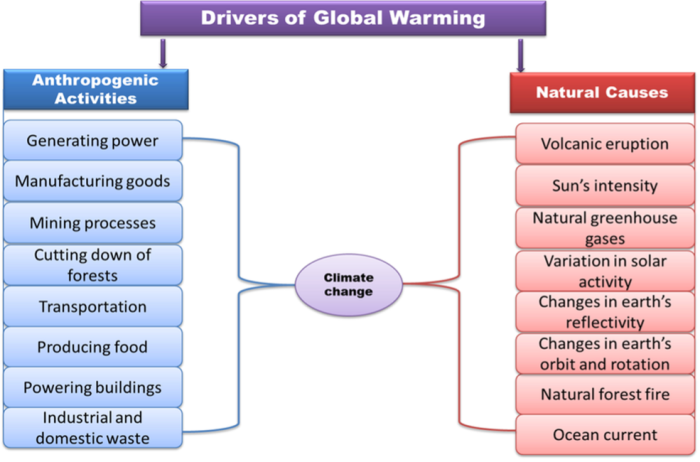
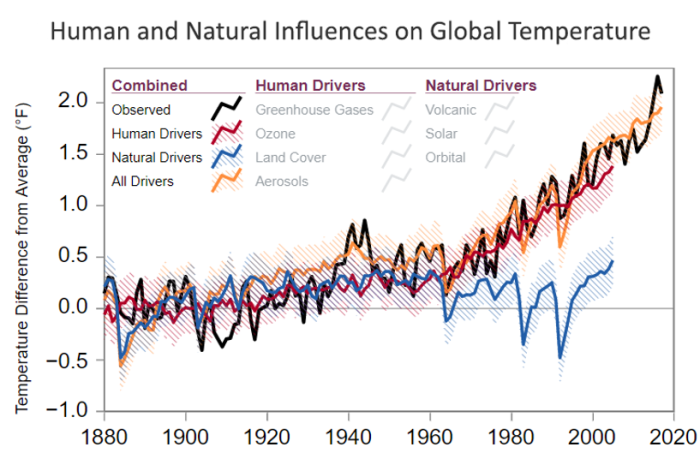
The percentage of natural versus human-caused emissions of carbon dioxide (CO2) and other greenhouse gases like methane (CH4), nitrous oxide (N2O), chlorofluorocarbons (CFCs) is a critical aspect in understanding the impact of human activities on climate change. While natural processes like volcanic eruptions and changes in the Earth’s orbit contribute to CO2 emissions, human activities have become the dominant driver of increased CO2 levels in the atmosphere.
Here is a breakdown based on the provided sources:
https://ourworldindata.org/co2-and-greenhouse-gas-emissions
https://www.carbonbrief.org/analysis-why-scientists-think-100-of-global-warming-is-due-to-humans
https://www.metoffice.gov.uk/weather/climate-change/causes-of-climate-change
https://science.nasa.gov/climate-change/causes
- Human Emissions: Human activities, particularly the burning of fossil fuels, have significantly increased CO2 emissions. The sources indicate that human activities have caused around 100% of the warming observed since 1950. Humans have contributed over 1 trillion metric tons of CO2 to the atmosphere through fossil fuel emissions and land use changes since 1850 when the atmospheric CO2 concentration was around 280 parts per million (ppm). The current level of 421 ppm is entirely due to human activities and this statement is supported by strong scientific evidence.
- Natural Emissions: Natural processes like volcanic activity and changes in carbon dioxide concentrations over glacial cycles also contribute to CO2 emissions. However, these natural emissions are relatively smaller compared to human-caused emissions. Volcanic eruptions, for example, release large quantities of carbon dioxide but are outweighed by human activities emitting more than 100 times as much CO2 as volcanoes each year.
While natural processes do play a role in emitting CO2 into the atmosphere, human activities have become the primary driver of increased CO2 levels and subsequent climate change. The sources emphasize that human-caused emissions have significantly surpassed natural emissions in recent times, leading to a disruption in the Earth’s carbon cycle and contributing to global warming.
Now what? What can one do in the face of this evidence?
Practical Solutions to Address the Climate Crisis
Having established that human-caused emissions are the primary driver of the disruption to the Earth’s carbon cycle and global warming, it is crucial that we now focus on concrete and practical solutions that individuals and communities can implement to address this pressing challenge. Here are some examples of actions that we can all take.
Individual Actions
While the scale of the climate crisis may seem daunting, there are numerous steps that individuals can take to reduce their carbon footprint and contribute to the solution:
- Reduce Energy Consumption: Adopt energy-efficient practices at home, such as using LED light bulbs, improving insulation, and minimizing the use of heating and cooling systems. Additionally, opt for renewable energy sources like solar or wind power whenever possible.
- Adopt Sustainable Transportation: Choose low-emission modes of transportation, such as walking, cycling, or using public transit. For necessary vehicle use, consider transitioning to electric or hybrid models.
- Reduce, Reuse, Recycle: Minimize waste by adopting a circular economy mindset, prioritizing the reduction of single-use plastics, reusing items whenever possible, and diligently recycling.
- Support Sustainable Consumption: Make conscious choices when purchasing goods and services, favoring products and companies with strong environmental and ethical practices.
- Advocate for Change: Engage with local and national policymakers to support climate-friendly legislation and policies. Participate in community initiatives and join advocacy groups to amplify the call for systemic change.
Community-Driven Solutions
Beyond individual actions, communities can come together to implement more impactful, collaborative solutions:
- Sustainable Urban Planning: Advocate for urban design that prioritizes walkability, public transportation, green spaces, and renewable energy infrastructure.
- Renewable Energy Cooperatives: Establish community-owned renewable energy projects, such as solar or wind farms, to generate clean power and reinvest profits into further sustainability initiatives.
- Circular Economy Hubs: Create local hubs that facilitate the reuse, repair, and recycling of materials, reducing waste and fostering a more sustainable economic model.
- Climate-Resilient Infrastructure: Work with local authorities to develop infrastructure that can withstand the impacts of climate change, such as flood-resistant buildings, water management systems, and emergency response plans.
- Education and Awareness Campaigns: Organize community-based educational programs and awareness campaigns to empower residents to adopt sustainable practices and advocate for climate action.
The next articles in this series will address in more detail some of these solutions and provide guidance for their implementation.
December 2023 – The Science Short Notes/SSN !
A Wonderful Journey in the World of Science
– reducing CO2 via fuel cell technologies – solid oxide fuel cells –
Life is an adventure from the moment you step out into the world and find your own way. We all have our story and a journey in life, we have dreams and the hope that one day we will live into reality. My life adventure is equivalent with a journey into the world of chemistry and engineering, filled with amazing discoveries. Through hard work, stressful long days, sleepless nights, moments of happiness or agony, huge challenges we master the art of science and we can begin the journey. We live in a global economy, where everything in interconnected in a network of information, business, financial transactions influencing and actual driving the global market development. Competitive is huge and harsh, thus the skills the quality of our work needs to be at the highest standards. Doing research at world class universities, getting advice from the brightest professors in the field, and being surrounded by the most talented scientists worldwide will help and contribute essentially to the success globally. This competitive world leads to outstanding and “daring” scientists who can help and push forward our society, improving the wellbeing of people and our day-to-day life, trying to minimize the impact on the environment and nature in general, what we, the HUMANS, impacted it significantly in the past century.
In the light of this context, “Science – The 6th-sense of Humanity”, as I call it, offers information about what scientist developed as solutions to help us as improving our quality of life and idea and innovation for moving forward as a civilized society. In this short science note, I will briefly review one novel technology, and today, it will be about the fuel cell technology, which can help and assist us with the goal of getting the pollution reduced, expressed here as CO2 emission.
For those who asked, “what is a fuel cell?”… a short answer, it is a continuous chemical battery, meaning that it is an electrical device capable of generating electricity continuously similarly to a well-known battery, exhibiting the advantages in terms of limiting pollution while generating electricity, with the potential of getting close to 100% electrical yields (at least based on basic thermodynamic laws).
There are several variants of fuel cells developed in the past decades, and they are ranked based on the optimized operating temperature range. In this short note, I will briefly review the main three technologies which got the attention of the “mad scientists” over the past decades, and these are proton exchange membrane/PEM cells, molten carbonate cells/MCFC, and solid oxide fuel cells/SOFC. Other types of fuel cell technologies were studied and developed but not discussed here.
The most popular ones are the so called “PEM cells”, which operates are temperature around 100oC, a limitation given by water boiling point which is needed as a matrix for ensuring the ions permeability of the membrane is based on the polymer called “NafionsTM” (developed by DuPont, currently Chemour). These membranes are permeable to hydrogen/H2 via a water-based electrolyte liquid in which the membrane is soaked, providing the capability of having a control oxidation of H2 to water and collecting the electricity. Recent studies are directed toward PEM cell which can operate at higher then 100oC and where water need or presence is reduced, as the PEM membrane will become more permeable to hydrogen, thus more efficient with higher density current. Lifetime of these PEM-based cells is still a challenge to become a large scale, commercially available technology, as today many of the applications developed are still in the prototype or developmental stage.
Molten Carbonate Fuel Cells (MCFCs) is another type of fuel cell technology, which is operates at much nhigher temperatures, 600-650oC, so significantly higher than the PEM cells; in these cells, the carbonates are being converted insitu into hydrogen, which is then oxidized to produce electricity and water. The waste heat is also being managed in a way in which temperature generated is being efficiently use in cell operation. The efficiency/yields of converting fuel into electricity can reach 60%, which is considered quite high vs the classical combustion technologies. One important challenge for the MCTCs is durability, which makes it less attractive long term and from sustainability perspective.
Solid oxide fuel cells (SOFCs) offer an alternative means for producing electricity via a controlled chemical reaction using a non-polluting technology. Since their initial practical development in the 60’s, fuel cells research was continuously regarded as a new, promising field of investigation aimed to developed a reliable, more efficient, and clean way to produce electricity. These devices were described “as exotic electricity makers limited to highly specialized uses like space travel, utilized for power source and drinking water for astronauts aboard spacecraft in the Gemini, Apollo and space shuttle programs”. Electrical vehicles (so popular these days and ready to take over the classical internal combustion cars), small units of power generators, or portable electronics, are some of the potential uses of fuel cells on a large scale. Currently, intense efforts are made to increase the cell efficiency and performance, while decreasing its size and cost.
The figure below shows the typical solid oxide fuel cell design based on studies I performed while being a postdoctoral fellow at University of Pennsylvania, Chemical Engineering Department in late 90’ and continuing working in the field till late 2000’, when I switched fields.
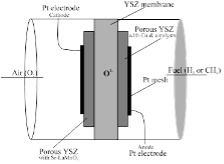
Schematic diagram for typical solid oxide fuel cell design, based on yttrium-stabilized-zirconia/YSZ membrane and Cu-dopped anodes
The SOFC are capable to generate electricity using classical hydrocarbon fuel (e.g., hydrogen, methane/CH4, butane, toluene, isooctane, etc.) with high current density. The way how these cells operate are as follow; the fuel/CH4 is fed to the anode side at high temperatures (for these cell, 700o-750oC), when the YSZ membrane becomes permeable for oxygen ions, thus, allowing oxygen to travel from the cathode side to the anode side; at this point, CH4 is being oxidized (thus burned in a very controlled and efficient/selective way), generating electrons (thus electricity) via forming water and CO2; the water is released and the CO2 is captured and directed toward another small miniature units to be either used for generating H2 or released. This is the most effective and clean way (no side products) to convert a fuel such as H2 or other hydrocarbons-based fuel, with yields which can reach theoretically 99+%. A typic al internal combustion engine or methane-based turbine to produce electricity can reach a max 40% overall yields of converting the fuel into electricity. This aspect, together with the fact that the polluting effect is significantly reduced by these fuel cells (less CO2 formation and emission, thus pollution), will make this technology an attractive and novel one for the future, and must be considered as a potential field of innovation and research with the goal to maximize the use of mainly clean energy resource for electricity.
In the recent days, a considerable effort is taken to develop new, reliable, high power, long lasting, solid oxide fuel cells, emphasizing the optimization of the cell performance in term of maximum power generation. From a practicality perspective, these SOFCs could be the basis of small compact, portable electrical generator units, operating with low CO2 emission, converting various efficiently and a cleaner way fuel into electricity. There are more challenges until this technology can become a commercially viable one. More research is needed to address issues with the
Government, large corporations and small innovation teams/start-up companies are all need to work together in order to develop and have in place large scale, reliable and accessible fuel cells system capable to address the future need to electrical energy.
In my view, the future of energy will NOT rely strictly only on one technology, but it will be a multitude of technology, including the classical one based on fossil fuel, operating in full synergism, thus I can see the nuclear power generators, solar panels, the wind mills, the efficient and longer lasting chemical battery (the new buzz in the corporate world is the “battery materials” for many companies, including BASF Corp), to provide their needs for the planet and the growing population in need of ENERGY!
One of the next topics of “Science – The 6th Sense of Humanity” will be producing hydrogen, the green, the blue, the white, etc… the difference among them, how to store them, and why we need hydrogen. Despite the fact that it is the most abundant element in the univers, we the humans, still have challenges to produce, store, transport it where we need, and use it in the most efficient and SUSTAINABLE way. Chemistry and Engineering will help providing SOLUTIONS !